

Cybersecurity History: Hidden Stories of Signals Intelligence
In this episode, Alice Violet explores the work of the National Signals Intelligence and Security Trust (NSIST). An organisation dedicated to preserving Britain’s signals intelligence and cyber security heritage.
You can watch the full episode on our YouTube and Spotify pages. Check out the full episode transcript below to learn all about this topic and our discussion on it.
Disclaimer: This transcript is an outline of the dialogue exchanged in this episode and may therefore contain inconsistencies with the video version.
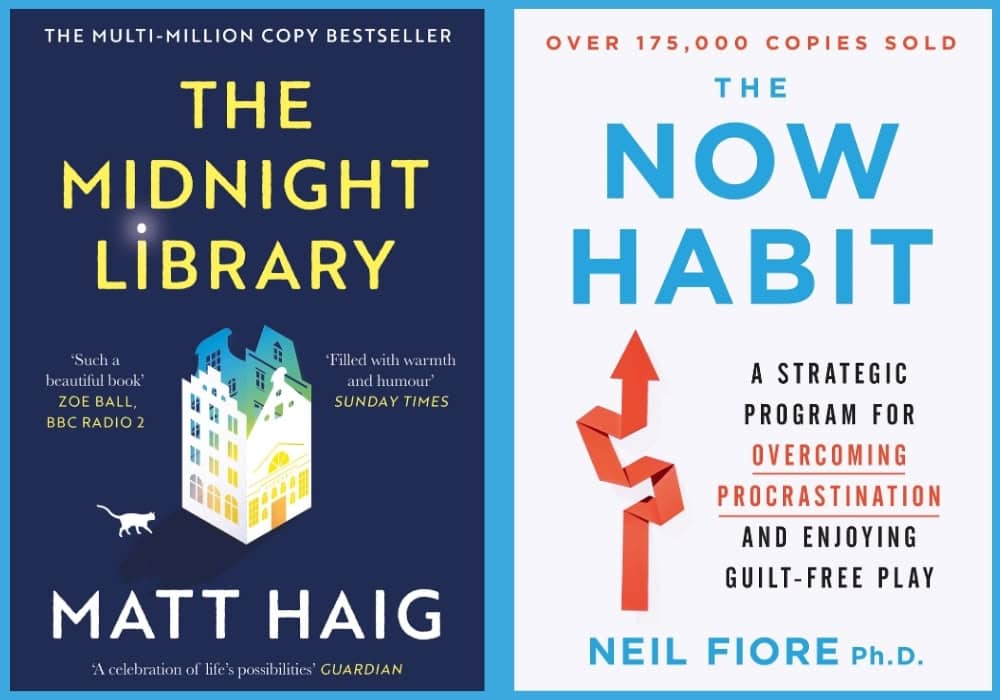
Our book recommendations for this episode were:
Alice: The Midnight Library by Matt Haig
Reid: The Now Habit by Neil Fiore
To discover more book recommendations, check out the Cyber Made Human Bookshelf
Cyber Security Heritage: Hidden Stories of Signals Intelligence Transcript
Alice: You are watching Cyber Made Human, the podcast that takes complex emerging technology and cyber topics and breaks it down into accessible and understandable content. I’m your host, Alice Violet, and today I’m joined by Reid from the National Signals Intelligence and Security Trust. We dive into the history of cybersecurity, not only here in Cheltenham, but also in the wider uk and the influence we had in things like World War II Signals intelligence, some of the incredible women and men involved in the history of cybersecurity and we uncover some of the hidden secret stories that are only just being uncovered today.
Alice: So Reid, welcome to Cyber Made Human.
Reid: Thank you.
Alice: It feels like we should have had this conversation a long time ago, and one of the great things about having a podcast is actually about. Having these types of conversations with people that I already know because I think sometimes there’s amazing people in our ecosystem and our community, and unless you sit down to dive into certain topics, you would never talk about them.
We know each other through CyNam and also Hub8. We met about three years ago. I think you were the first person I met in the Cheltenham cyber ecosystem, and then you introduced me to everybody, so thank you.
Reid: You’re welcome.
Alice: You’ve been working in cybersecurity now for about 30 years I believe.
Reid: 35
Alice: Wow. Yeah. So I’d love for you to share a bit more about your background.
Reid: Well, thanks Alice. Thank you for having me. I mean, it is a pleasure and yeah, I mean, why have you not invited me before? Um, yeah, I mean, so I’m Reid. I grew up in Scotland. Uh, you can sometimes hear a bit of a Scottish accent, either when I’m angry or I’m excited.
Both my parents left school at 14. I went to university. I was the first in my university. I was the first of, my, my family to go to university. I was really interested in computing and IT, in, you know, early eighties and I did electronic engineering. Right. Uh, so after, after university I was looking for a job.
I think I already had a public service, uh, thing going on, but I wouldn’t have said that at the time. And I applied for a job to work for the government. I had no idea really what I was letting myself in for. And I got the job and I ended up, next thing I know, I’m in Cheltenham and I spent many years working for the government in cybersecurity.
And I did all sorts of work here. I did, um, a lot of engineering. I did project and program management. IT, I worked in cybersecurity and data, all sorts of stuff, very much behind. Barbed wires. Um, and then a number of years ago, things started to shift for me, partly ’cause the world was changing and I started to see lots of things happening outside of government.
And, we had set up an innovation program and I put myself forward. And the next thing I know, I’m starting to work outside of government and I’m meeting people in the local community and elsewhere and I start to travel and I, realised that innovation in itself, you know, creating new value was something that could be studied and learned about.
And so I became a bit of a practitioner in, innovation, particularly around technology, but I never lost my cybersecurity or national security interest. Right. And from that I ended up, doing a variety of things, including getting involved in things like CyNam and then more recently, becoming one of the first trustees of NSIST which is what we’re here to talk about. The National Signals Intelligence and Security Trusts.
Alice: Yes. Yeah, I’ve got it right. I’m glad you said that, not me. So with NSIST, the work that you are doing, I know was kind of spearheaded by Dave Abrutat who I haven’t had the chance to meet yet. So the angle of today’s conversation is kind of around uncovering some of the secrets that they haven’t historically been able to talk about. And you mentioned that there’s a lot of people who dating right back to the World Wars have been involved in this work and you know, you are losing them as they age or unfortunately die. Um, but I’d love for you to just share a bit more about NSIST, how it came about and the work that you’re doing.
Reid: Sure. Um, so I mean, maybe the. First place to start is Bletchley Park. Mm. So a lot of people have heard about Bletchley Park, or they’ve been to Bletchley Park in Buckinghamshire. It’s a lovely stately home, Manor house that had an incredible role during the Second World War it was about seven years, when it actually was doing amazing things, Popularised through films, uh, like, um, The Imitation Game, where Alan Turing, this incredible mathematician was cracking the Nazi codes, used by Enigma. And this was all secret during the war, and I think Churchill called it the, “the goose that laid the golden egg.” So, you know, Bletchley Park as a, a charity has been around for a number of years and has really popularised a lot of the history around signals intelligence in the uk and it’s brilliant.
But of course that seven years of history and actually signals intelligence and security goes back over a hundred years. Back to the First World War. In fact, there were a whole load of sites called Y stations that were created to listen in to things like Morse, um, all over the country. The first one was, or one of the, one of the early ones is in Scarborough or, and that is still a place that the government has today.
So GCHQ has a facility in Scarborough, but there were loads of other places that had nothing to do with government, and they’re just places. So for example, Beaumanor Hall in Leicestershire, that was a Y station during the Second World War. And there were so many stories about what the people got up to there, but actually government has no, responsibility for these sites.
Yeah. And. Without the work of an organisation like NSIST, there’s a danger that we will lose all this heritage and history, both the physical sites, but also the people that you talked about. Yeah. There are still people today who have stories about what they were doing from the second World War onwards that have never told those stories to anybody.
So there’s, uh, an oral history that is, is yet to be told and we can’t. Expect GCHQ and the government to do all of this work ’cause they’ve got a job keeping the country safe today. So that was really the origin of NSIST, setting up a new charity. And I know David had been thinking about this for, for several years, and through meeting a variety of people, partly through the ecosystem in Cheltenham, he and others were inspired to set up this new charitable trust.
And we were set up last year as an actual charity.
Alice: Amazing. Which is great. And I, I’d love for you to share maybe some of your own personal history stories.
Reid: I studied electronic engineering for my undergrad, but I did have a bit of an obsession with learning and education. So, you know, in Cheltenham, I, I did a master’s in ancient Hebrew and biblical, biblical studies.
It was the first time I’d studied humanities, so learning about philosophy and religion and theology and, um, text and history. I’d never actually studied history before properly at a, at a, at a postgraduate level. Yeah. So, so that was, that was amazing. Um, and it did open up a whole load of things for me.
And, and more recently I’ve also done another, the masters in cybersecurity at, uh, university of Oxford. So I’ve got quite a broad view on things. But I guess in terms of coming back to signals intelligence and security, it’s not all about the technology. Actually it’s, it crosses the divide of humanities and, and sciences.
It, it is about, communications, you know, radio and microwaves and, and whatever. Um, tele telegraphy, uh, but it’s also about. Current affairs and statesmanship and languages. So there’s a whole mix of humanities and sciences when we tell the story of signals intelligence. Yeah. So, uh, it’s something for everybody.
Alice: Definitely. Yeah. And have you got any kind of stories that you’ve uncovered yourself?
Reid: So, we were saying earlier I met, uh, a guy called David Schneider. Two or three years ago, he, he and his wife were in the eighties and they had come back to Cheltenham to, uh, basically visit, uh, and some of the old places that they, they’d been.
And I, and I, I bumped into him and we got chatting and, you know, I told him I worked in, in the sector. Mm-hmm. And he was telling me about his early career. He started off, I think as an apprentice engineer and he got a job at GCHQ, and this is in the 1950s, and it’s like. Unbelievable. But he was telling me about his work or working on something called Colossus and Colossus, uh, for those that may not know, was the first programmable computer.
In the world that was originally created by Tommy Flowers, another great engineer at Bletchley Park to help with decrypting Nazi codes. Wow. And so the original Colossus has completely been destroyed, and there’s a replica you can see if you go to the National Museum at Computing in Bletchley. Again, looking at the, um, the, the, the, the GCHQ declassified history, which you can see on their website, Colossus machines that I think there were 10.
Created, and some of those found their way to Cheltenham when GCHQ moved to Cheltenham in the 1950s. Mm-hmm. I think one was called red and one was called blue. Now it turns out, David, this, this chap that I met had actually worked on Colossus. Wow. I’d never met anybody who had worked on Colossus, and it was tantalising just to hear some of his stories.
That was it. We had quite a short meeting. I took his email address and he lives in Germany and off he went and I thought, great, I must email him and introduce him to David Abrutat Um, but I got no reply. And to this day, I don’t know whether David is out there. If you’re listening, David, please. We get in touch.
Yeah. But it may be that he’s no longer with us ’cause he was in his eighties. Oh. And so those stories. Maybe lost for forever. Yeah. And, and how many hundreds and thousands of people throughout the UK and the world who worked on signals intelligence and security have those stories? I’ll give you one other one.
So there’s a, and I, I think a US historian, um, Marie Hicks, she wrote a book called Programmed Inequality. And she talks about the history of women in computing.
Alice: I was gonna ask about that.
Reid: Yeah. Um, she was in the military and got drafted into Bletchley Park and then GCHQ and so, so Marie’s book. Suggests that there were Rens working on computers Yeah.
In the 1950s at GCHQ. Yeah. And we don’t know. Mm-hmm. And we don’t know what their stories are. Mm-hmm. And so can NSIST. Uncover some of those stories, whether that’s the oral history as well as actually some of these Yeah. Physical sites all over the country that are just not being looked after.
Alice: Yeah. And I think that’s a really interesting lens as well, because, um, when we look at history, like there’s a book by Katie Hessel on the History of Art without Men, and it goes back to the Renaissance and other times when we celebrate Michelangelo and Caravaggio, but actually there were female artists doing, just as incredible work before or at the same time.
And I think with kind of doing work now and uncovering those stories, I don’t think it’s gonna be as biased a history. Yeah. And it’s good that we kind of, we are finding women stories in these stories as well. ’cause I think during the war when a lot of men were soldiers, it was the women that were working in these kind of roles.
Reid: Well, I was looking just the other day in preparation for, for the, uh, podcast. Um, a lady called Joan Thornton. She was originally from Liverpool. I think she was 22 when she was drafted into the auxiliary, um, uh, army. And this was 1942. And she ended up at a place called Beaumanor Hall in Lestershire.
Mm-hmm. Next to a little village called Korn, which is where the, the food is named after. Okay. Yeah. So you can Google that. But in Lester Lestershire and Beaumanor Hall was a Y station. So that was a place to, listen to all these signals. And so she had to learn Morse code and she had to. Transcribe the Morse code and then it would be sent off, I guess to Bletchley Park.
And she was there with lots of other women and they were there for, I guess, two or three years during the war. And this was all in complete secrecy. So they couldn’t tell anybody what they were doing. Wow. But they were contributing to, to, uh, defeating the Nazis. During the second World War in this manor house in the middle Le in the middle of Leicestershire.
Wow. And so, you know, the, the stories that she, she was actually interviewed before she died, sadly, in 2016. Um, and thanks actually to the local history. Group in that part of Leicestershire who’ve actually, thankfully been, you know, doing a lot to, uh, to look at the history of Beaumanor.
Alice: Right. And is that something that you are doing as with your work in NSIST, is looking at existing trusts and charities that are doing the kind of work that you are doing and, and piecing them together?
Reid: Absolutely. So part of what we are about, um, is not only promoting the, the history and the heritage mm-hmm. Uh, but running event. And partnering. So in fact, I think we had an event fairly recently at Beaumanor Hall. Wow. Where we met with the local groups that are working on the history at Beaumanor. So, so there’s plenty of opportunities in the future for doing events as well as raising awareness and maybe even doing some archeology.
Ad break: The Cyber Made Human Podcast is produced by Alice Violet Creative, my content marketing agency based in Cheltenham. We specialise in complex brands, which primarily means those in emerging technologies, cybersecurity and intelligence, we’re able to take abstract, clinical, and difficult topics and make beautiful, compelling and results driven content.
So get in touch with us for digital marketing and all your content needs.
Alice: So, the wonderful Patty Moon, who sat behind the camera today and is one of the trustees of NSIST, thank you for organising, getting NSIST on. So made human amazing to have you here. Um, she was mentioning about the kind of heritage of British history and how much Britain has influenced signals intelligence, but also that we kind of sometimes focus on obvious, uh.
Countries like Russia, and actually there was a lot of work that you’ve been uncovering with kind of Japanese language and other things, and I’d love to touch a little bit on that.
Reid: Yeah, I mean the, obviously there’s the, the, the war in, in the East and we’ve had VJ Day, uh, fairly recently, victory in Japan.
So at GCHQ there were lots of linguists dealing with lots of different languages and as I guess there are today, um, and we think about German during the Second World War, but actually, you know, if we think through to the Cold War, we have Russian and other languages. So, so, you know, being a, a linguist is, um, you know, it’s a very skilled job.
Yeah. Particularly if you are listening to technical, uh, um, languages. Yes. Um, another anecdote, just, uh, where we, we, we are talking about, um, contacts, and this is again, completely independently, so a friend of the family. Her father, um, sadly passed away fairly recently. He was actually a Church of England vicar for most of his career, and towards the end of his life he was talking to his daughter and I dunno how they got onto the subject, but it, um, he started telling her the story of when during the war.
He was, quite good at languages and he was asked to do a test and in the end he became a, Russian linguist he ended up training in Cambridge and he was working for GCHQ during the Second World War as of Russian linguist. Wow. But that story was completely, um, uh, no one knew about it. It was almost by, well, it was by accident that his daughter happened to be talking to him.
And, you know, fortunately, she was able to record some of his experiences of what it was like being in Cambridge. I mean, he’d come from Nottingham, actually someone else from Nottingham. Um, and he know, he, he’d come from a humble background. And I think that’s the thing. There’s so many stories of ordinary people Yeah.
Getting these opportunities. And they, they were doing it not necessarily for personal gain, but because of the need. Yes. for, for the country. Mm-hmm. And there was a real sense of mission and purpose, which, which is, uh, still the same today. If we think about those involved in, um, both signals intelligence, but also things like cybersecurity, which I know, you know, we’re, we’re talking about here.
Alice: Yeah. Well, absolutely. And I think that’s a really interesting. Thread that I’m noticing actually with the intelligence sector and maybe cybersecurity, a lot of people are working class. Mm-hmm. And I think that’s one of the things that really attracted me to the industry. Mm-hmm. Because my background was in luxury marketing prior to that, and.
Actually, it’s more entrepreneurial because people are education hungry, knowledge hungry, and not necessarily for wealth. Mm. Some people are. Um, but for knowledge and just wanting to learn from the past. And it sounds like some of the work that you’re doing with NSIST is kind of about how can we learn from.
Reid: This past so that it doesn’t get lost with time. I think there’s a lot to learn, Alice. Absolutely. Uh, it’s not just about the past and about, you know, old men and women. There’s something about learning for the future Yeah. For the next generation. Uh, whether that’s in terms of technology, you know, stem, but also you know, what it means to serve, your country to be a citizen and the, the intersection of, of technology and state craft and just working together in different ways.
So, so there’s a lot to learn, um, from the past, but actually there’s a lot, you know, that we can pass on. And so part of what we want to do as well is to celebrate. Some of this history and think creatively with communities about how we can actually do that in, in new ways.
Alice: So. With the current geopolitical climate that we’re in, and we’re seeing kind of a complete restructure of historic situations and allies and things like that. Just on a personal level, do you feel like uncovering some of this stuff is helping to kind of see how much of a shift has happened and help educate that shift?
Because I guess a lot of this shared knowledge and shared expertise from the past might not want to be shared going forward, and I just wonder what your opinion is on that.
Reid: Yeah, I mean, I suppose, um, I, I don’t know if that’s specific to singles intelligence. I think it’s. Partly generational, partly, um, uh, who came through the second World War and, and conflict since mm.
And I guess at the end of the Cold War, uh, there was, what was it? Francis Fukuyama said, “the end of history”. And those of us who were, who were around at the time, I mean, I was a teenager when the Berlin Wall came down. We didn’t ever believe that would happen, right? Because we grew up thinking that there might be a nuclear war.
You know, we, we, we, you know, we listened to Frankie Ghost, to Hollywood and, and you know, two tribes. And so when the Berlin War came down and the end of the Cold War, we thought that was it, you know, and we’d have world peace and prosperity. And of course, we fast forward to today and we’re in this environment where actually we’re not really sure about our security, uh, nevermind prosperity. Hmm.
So I suppose there is a lot to learn from how people approached uncertainty in the past. Yeah. I guess it’s a slightly different context, but a lot of things will be the same.
Alice: Yeah, I think you mentioned earlier about there was some British innovation that happened, and separately, two Americans had the same innovation happen.
Reid: So, uh, we’re in Cheltenham today. If you walk just down the road to the, the Wilson Museum, you go to the first floor, there’s an open archive, and it’s open. So you can go in, has all sorts of things to do with Cheltenham and its history. There’s a glass case about GCHQ. There is a plaque there from the IEEE, uh, from the US commemorating the invention of public key cryptography.
Now, public key cryptography was invented by some amazing mathematicians in GCHQ in the 1970s, but this was kept secret for quite a few years, and separately in the US. Some researchers called Diffie and Hellman invented a similar sort of scheme. Now, Diffie and Hellman were not working within government, and so they were able to publicise it.
And then some entrepreneurs, RSA, created some software and before, you know it the security. For the internet was created. So the same mathematics was invented in GCHQ before this. But it was kept secret until the government then declassified it. So that’s how we know about it today. That’s interesting.
So, so you know that that foundational. Security for the internet was discovered here. Not that, not this far from where we’re sitting. Yeah. In the 1970s, what was that, 50 years ago? Four to 50 years ago. So, you know, there were some of the things that have been happening in signals intelligence over, over the, the last a hundred plus years has had quite a material impact on the world.
How many of those stories are yet to be discovered and, and not just in government, because obviously that’s government’s job, but in our role as NSIST, as a charity, we can reach out to all sorts of organisations all over the place, uncover some of those secrets that might have been hidden forever.
Alice: So finally, before we move on to the cyber made human bookshelf, my final kind of question for you is about the future, not only the future of the work that you are doing, but how the work that you are doing and uncovering the secrets of the past is gonna kind of shape what we do going forward.
Reid: I think what’s exciting is not just the content of what we do in terms of discovering the history and celebrating it and sharing it, actually the nature of what we do. So setting up this charitable trust, a national charitable trust. We have the opportunities to innovate in terms of the business model and bring in sponsorship and members in a way that just wouldn’t be possible.
If it was within government. Right. So I’m, I’m particularly interested as an innovator in how these new approaches to getting things done can really help deliver value in a way that I don’t think it would be possible. And, and because it’s a charitable trust, we are open to members so anybody can join.
You know, you don’t have to pass a security clearance. Anybody can become a member of NSIST. It’s, I think, 10 pounds. For a year membership. Wow. Uh, we have a website, NSIST.org where we have lots of information, including a members only area. And as I, as I say, we run events and we are thinking maybe even doing more of podcasting.
So there’s plenty that we might do. And I would say. We are just at the beginning of our journey. Yeah. So we are, we are, we’re learning what good looks like. Yeah. And so there’s plenty of scope to get involved. Amazing. And to shape this. Yeah. And who knows where we’ll be in a year’s time. Yeah. If we have a, a repeat one as
Alice: Wow. Exciting. Well I’d love to be involved and I’m definitely gonna be following the journey closely. I’m very interested in this. So thank you for sharing. And my final question is the cyber made human bookshelf. So this is your opportunity to share a read that changed your thinking or your favorite book.
It doesn’t have to be related to what we’ve talked about. It’s just an opportunity for us to get to know you as a person a bit more.
Reid: I, you know, Alice, I was thinking about this. There’s so many books that I could talk about. I could talk about all of Gabor Mate’s books, you know, Scattered Minds, the Myth of Normal.
I could talk about Brene Brown and um, you know, she’s done some great work.
Alice: The vulnerability stuff. Yeah.
Reid: Oh, absolutely. I mean, I, it’s helped me so much as me as a person. Me too. The thing I would say, the one that started me on this, on this sort of journey is called The Now Habit. And I was, I was suffering from a lot of procrastination.
I was deep in my master’s research at Oxford. And I was really struggling and I found this book recommendation and it did change my life. And the key thing that I learned was that procrastination is pain management, and it started me thinking about emotions and my emotional life and how much the anxiety I had was wrapped up into performance and procrastination and a whole ton of stuff, and it was just a very simple book, but it was really, really powerful and Wow. That, yeah, that, that was just what I needed at the time.
Alice: Great. I love that when you discover a book that you just need in that moment. Amazing. Thank you.
Well, my recommendation for this episode is my current read, which is Midnight Library by Matt Haig Uh, this was actually recommended to me by Claire Marchant, who came on series one. Of Cyber Made Human, and it follows the story of somebody who tries to kill themself, actually tries to take their own life.
And as they’re kind of in between life and death, they’re taken into a library full of books and it’s their opportunities to experience all the lives they could have lived and. I haven’t finished it yet, but it’s a really interesting thing because I think a lot of us live our lives thinking that we’re doing something wrong, and if we go down one path, what if the other person or opportunity or job was the better option?
And this gives the person the opportunity to explore what all those other options were. And see, you know, if you had lived infinite lives, what actually would. The point been and what was the benefit, and I haven’t come to the conclusion of the book yet, but I’m pretty sure the person is hopefully not going to end up dead and will go back to their life a lot more satisfied.
And I think it’s a really interesting read. So I would recommend it. But yeah, thank you for joining us today and thank you for watching. Make sure to subscribe. Thank you guys.
Reid: My pleasure.
Watch the episode now!
Watch on Spotify
Watch on YouTube
GET IN TOUCH FOR ALL YOUR 2025 EVENT NEEDS
PHOTOGRAPHY | VIDEO | LIVE STREAMS | LIVE PODCASTING | SHOW REELS