
Cybersecurity is Becoming Everyone’s Problem (Not Just CISOs)
In this episode of Cyber Made Human, Alice Violet is joined by Hollie Wakefield, General Manager at CyNam (Gloucestershire’s cybersecurity cluster), to discuss what cyber clusters actually are, why Cheltenham has become a powerhouse, what’s coming for cyber in 2026 and why cybersecurity is becoming everyones problem.
CyNam sits at the intersection of industry, government, and academia and Hollie has been central to growing the community, building partnerships, and pushing the idea of secure innovation: making emerging tech secure by design, not bolted on as an afterthought.
You can watch the full episode on our YouTube and Spotify pages. Check out the full episode transcript below to learn all about this topic and our discussion on it.
Disclaimer: This transcript is an outline of the dialogue exchanged in this episode and may therefore contain inconsistencies with the video version.
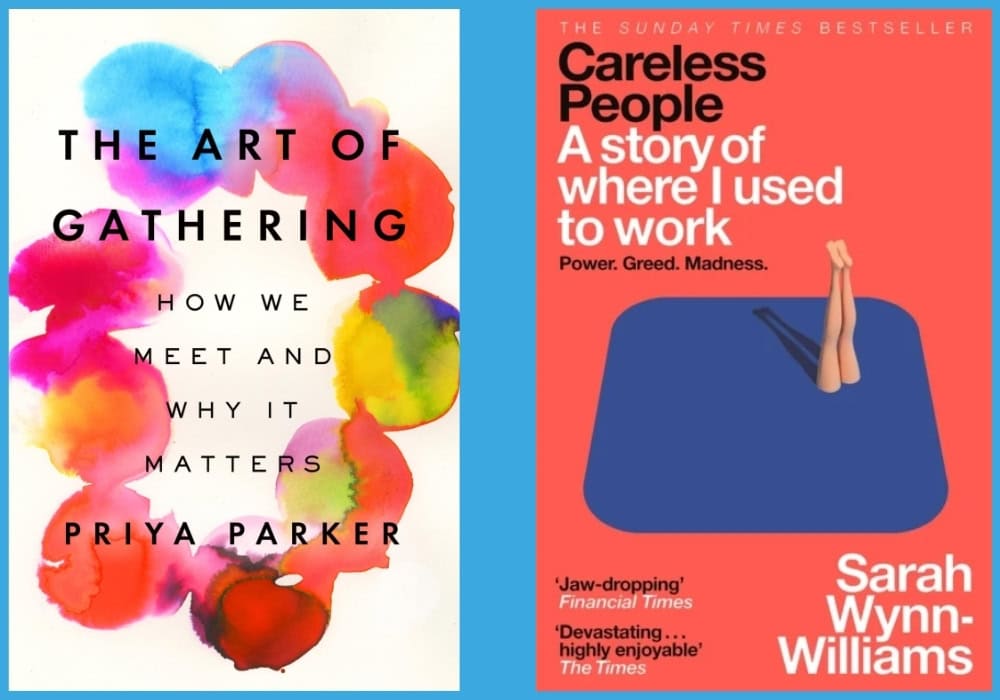
Our Cyber Made Human Bookshelf Recommendations For This Episode Were:
To discover more book recommendations, check out the Cyber Made Human Bookshelf
Cybersecurity is becoming everyone’s problem transcript
Intro: You are watching Cyber Made Human, I’m your host, Alice Violet, and today I’m joined by Hollie Wakefield. Hollie is CyNam’s General Manager, and CyNam is Alice Violet Creative’s partner. We work with them to help them with a lot of their communications and marketing. Hollie has been part of that team for nearly three years.
She’s been in her role as general manager for the last 18 months and has done some incredible work in growing the CyNam community by orders of magnitude, also acquiring incredible sponsors, and she launched Gloucester first Tech Week, which we enjoyed in October of 2025. So I’m really pleased to manage to steal some of Hollie’s time to talk to her about the collaborations and projects that she’s working on, and find out what she thinks is coming up for Cyber in 2026.
Let’s get started.
Alice: Hollie Wakefield, thank you so much for joining me today, I know you’re a very busy person, so I really appreciate you coming on the show. Um, so CyNam has been referenced in pretty much every Cyber Made Human episode that we’ve done, and that’s because it means Cyber Cheltenham, which is of course where we’re based.
We’ve got Chatham Town Hall behind us today. Um, but for anyone who doesn’t know, can you just explain what CyNam is and your role?
Hollie: Absolutely, so CyNam is a cybersecurity cluster representing Cheltenham and the county Gloucestershire. We are a non-for-profit community interest company designed to bring industry, government, and academia together around cybersecurity topics.
We have three key strategic objectives focused around. Ecosystem development. So that’s bringing industry, government and academia together, innovation and investment, so supporting those startups and helping them to get the funding that they need to scale and grow. And also skills growth as well. So not just supporting the next generation of cybersecurity professionals, but also helping budding entrepreneurs as well.
Alice: Amazing. So for anyone who doesn’t know, there are lots of cybersecurity clusters around the UK and there’s Cyber Oxford, cyber North, and you’ve done kind of collaborations with them. But for anyone who doesn’t know what is a cyber cluster and how does CyNam fit into that?
Hollie: So a cyber cluster is a natural concentration of organisations in and around the cybersecurity sector.
CyNam is the oldest and most active of its kind. It’s because of GCHQ, the large donut shaped building that we’ll, um, refer to. I’m sure that’s got plenty of mentions in your episodes as well. Yes. Um, and the concentration of businesses around here. So Cheltenham actually has 11 times the UK norm of, of cybersecurity businesses.
And then fast forward to 2022, the National Cybersecurity Strategy came out as well, which called for more regional, effective side cyber networks to harness the expertise um, and the differing expertise in, in the different areas of the uk. And so, uh, UKC3 was born, UK cyber cluster collaboration, and that was a result of CyNam’s former managing director, Richard Yorke and, and others.
Um, drawing upon upon that need for more effective regional cyber networks, there’s now 18 cyber clusters. Wow. So everywhere pretty much has one. From Oxford Cyber to, um, the West Midlands, uh, Midland Cyber, you’ve then got, uh, Scotland is, which represents the Scottish cyber cluster. The Northern Ireland cyber cluster and so the list goes on.
Alice: Wow. So I didn’t realise that CyNam was then way ahead of the curve, ’cause CyNam came about in 2015 and then the cyber strategy came out in 2022. And it’s all the other clusters emerged after that. Is that right?
Hollie: So they each emerged it at different points, so there was a founding clusters. I think cyber wales is another example of a founding cluster.
Um, but some are as new as, as six months old.
Alice: Wow.
Hollie: So they all, they all very much vary. Um, one of the most recent ones to be established was cyber London, but naturally they’ve kind of had a hockey stick growth trajectory where because of, again, the concentration of businesses there, the natural interests, government, et cetera, they’ve.., yeah gone on to do amazing things.
Alice: Wow. And you are the general manager of CyNam. So it’d be interesting for you to just talk a little bit about where Cyan is now and anything significant that’s happening that you’re currently working on.
Hollie: Yeah, so CyNami now is just celebrated, its its 10th anniversary, which is incredible.
And I think what we are seeing from, um, where we’re going, how things have developed over the last 18 months since I took my post as general manager mm-hmm. Is. Thinking about what does cyber really mean in the broader context and looking at the growth and proliferation of emerging technologies, and really now what we’re looking at.
From a CyNam perspective is the concept of secure innovation. How do we take the world class leading expertise in cybersecurity that we have here in Cheltenham and really make Cheltenham the home for secure innovation? And so by that I mean how do we make sure that those new technologies and existing technologies are secured by design.
Alice: And would you say that Cheltenham is already the leader of the UK cyber scene?
Hollie: I think absolutely. I think Cheltenham and, and the county more broadly, Gloucestershire I think really is, I think there’s some potential competition, um, with the likes of Greater Manchester Combined Authority and, and Manchester more broadly.
But I think that really has the scope to change. Just in Gloucestershire recently launched the local Growth Plan, which really talks about making Cheltenham and Gloucestershire the home for secure technologies. Mm. So I think those types of differentiations will really help us. Further kind of cement our position in, in that area.
Alice: And I guess for anyone who doesn’t know, when you talk about secure by design, that means that any technology company that’s not cybersecurity at all might be building apps or technology and cybersecurity has intrinsically baked in. And historically, it’s sort of been a bolt on or an afterthought.
And what we’re saying and seeing is that Gloucestershire based companies are secure by design because of the type of people that exist in this ecosystem
Hollie: I think not exclusively. And I think that’s a really exciting opportunity as well. I think it, it starts at home and I think there’s more that can be done to help, uh, promote cross-sector collaboration between the cybersecurity businesses and professionals.
And general expertise we have here with other businesses across the county. And I think once we’ve got that right, that provides a really exciting opportunity to, to scale and and spread that message.
Alice: Yeah. Amazing. So for anyone who might have come across this cyber made human episode as their first episode.
Can you just explain the difference between technology and cyber?
Hollie: So I think everyone you ask will have a different answer and I think cyber is used interchangeably with a lot of different words now and, same for technology, but cyber for me is the security of technologies. Um, and the information and the data that, they possess and transfer as well.
Alice: Yeah, I think that makes sense because cybersecurity is more specifically the protection, as you say, and technology is more broad. Yeah. And on the topic of kind of broader technologies, I know that through CyNam and the cross sector collaborations that you mentioned, you’ve done loads of knowledge sharing with different industries like you did a space.
Uh, yeah. Event, I think it was last year or the year before we’ve done Agritech, we did a documentary series on the kind of different, um, industries that need to be secured. Can you just talk a little bit about the importance of cross-sector collaboration and also some of the more interesting, like the space collaboration was fascinating?
Hollie: Yeah, absolutely. So. For me, cross-sector collaboration is really important. So again, helping to leverage the cybersecurity expertise we have here and transfusing that to different sectors. I think if we take space, in example, space is, is, is changing a lot and priorities are shifting. But in the past we really saw that as the, I think the forgotten part of critical national infrastructure.
You don’t realise that items and, technology in space you rely on literally every day. I mean, me, I’m terrible for directions. I need GPS here, there, and everywhere. Um and if certain satellites in space were, attacked, um, then GPS could very easily go down. And, you know, it doesn’t matter whether, you know, I can’t get to the shops or not, but what it would matter is in military scenarios, for example, um, for plotting routes on ships and you can imagine consequences That that would have. So it’s really, really important. You know, as technologies proliferate as well as it’s so much easier to put something in space now, you wouldn’t, you wouldn’t believe. Um, so it’s really, really important that not only are the things we put in space are secure, but also the way that they transmit data to one another, that information’s also secure, and the things on the ground that control them are secure as well.
And without helping to share knowledge that already exists and it is not that different. Fundamentally, we can make huge, huge leaps and bounds in, um, security and resilience importantly as well of, of key sector groups. And that’s the same for agriculture as well. I mean, food security is, is a really, um, big concern I think recently it was in the news that the UK would have something like two years of, of food supply. Um, and if we think about. I don’t know. Let’s say drones that are spreading fertilizer, if they were affected by a cybersecurity incident on, on a mass scale, it, it wouldn’t be hard to think about the implications that that could have.
Alice: Yeah, I think that’s really interesting. I’m putting it into those real world, relatable scenarios is also really important. ’cause space and cyber can feel so abstract to people. But actually when you say like using GPS or your drinking water or food source, it’s not abstract at all. Yeah. And I think the event that you did on the space, was it Guardians of the Galaxy Event?
Yeah. Was super interesting. And I think one of the things, not just cybersecurity, but physical security of satellites in the sky and they were saying that it’s almost becoming. Littered up there with kind of redundant satellites that are clanging into really important satellites and that there are companies whose job it is to take them down and remove them because of the risk that they pose.
And it’s, it was so illuminating to hear about that. So it’s so important to do those collaborations, I think.
Hollie: Yeah, and for that it created a much bigger project as well. So specifically what you are talking about is space domain awareness, so actually knowing what’s up there and whether it is going to crash with one another.
Um, so that actually resulted partially, I should say, in, um, funding being secured by Space West. So another cluster, but for space technology is in the west of England to, um, lead a bid by satellite applications, catapult on the cybersecurity of space domain awareness. Wow. So a much broader and, and longer term project focused on really bringing together cybersecurity expertise.
With space domain awareness experts to make sure that that specific area of space had cybersecurity in mind and centrally.
Alice: So changing gears slightly, one of the things before we move on to kind of the biggest trends and challenges you’re seeing in 2026 is what were the biggest changes and shifts and biggest stories in 2025?
And we’ve seen household names like Jaguar, land Rover being hacked, Harrods, all these massive companies. And I think for the first time in my life, I’m finding people in my personal life outside of my work life, talking about cybersecurity. People like my sister and her husband who’ve never said the word before, are bringing stories to me.
And I think that’s been a huge shift in public awareness. But from your side, in terms of being so immersed in cyber and all these industries, what are the biggest things that you’ve noticed shifting this year or last year?
Hollie: So I think what you say about public perception is really interesting, actually.
It comes back to making it real for people. Did you want to purchase a new car? Did you find you couldn’t get your hummus on the shelf at the Co Op? or you couldn’t get your meal deal from m and s? Those are all things that, you know, make it real for people and you know, actually start to make people think about the importance of these things, and again, how it can impact their daily lives.
But some of the, the case studies you mentioned that I think it’s about magnitude. So we’re seeing, and I think you could say this every year though, that the magnitude of cybersecurity attacks is going up and up and up and, and that’s due to the range of a whole different, um, set of intersectional factors.
But the Jaguar Land Rover, um, incident, for example, was the biggest and most costly cybersecurity incident in, in UK history, and I think BBC reported that it costs them 50 million pounds every week. So a huge, huge scale. Mm-hmm. Um, but I think on the back of that, and also in response to shifts internationally as well, um, we’re seeing organisations prioritise resilience more so not just how do I prevent a cybersecurity attack from happening, or, um, what do I do if something goes wrong?
But actually, how do I manage it to my best effect? So how do I stop that, that chain reaction from happening where one small thing that can be easily contained and perhaps doesn’t have as big as implications of like resort JLR, um, can yeah, not, not proliferate, and have not just implications on the organisation.
On the wider supply chain, societal implications, you know, people losing their jobs just before Christmas. It can create huge societal unrest as well. It’s, it’s not just about, you know, economics.
Alice: Also the longer term implications of that. ’cause I think, were you saying earlier that it was the biggest breach of passwords in history in the UK as well?
Yeah. And so even though some of those would’ve been old passwords, a lot of them wouldn’t have been. Yeah. And what are gonna be the kind of knock on effect of all of that data being stolen, not just them being offline for however long they were, but what are they gonna do with the data that they took?
Hollie: Yeah, exactly, so that was another, another incident that 16 million passwords were leaks. And as it, as it said, I think in some of the coverage that yes, they were old, but, but you know, very simple basics. How many people reuse their password, don’t change their password? Mm-hmm. That’s where we’re seeing the rise of and identity playing a really important cyber important part in cybersecurity.
Mm-hmm. So things like more, um. Biometrics, multifactor authentication, that kind of thing, rather than just having your password, um, and reusing it and having it subject to a data breach. ’cause if you’ve got an iPhone for example, and you go on Password Manager, you can see, for example, it will show, “oh, this password might have been subject to a data breach.”
I would love to know how many people see that and think “Who’s gonna care about my profile?” and not do actually anything about it, but. It only takes one minor inconvenience. I think, let alone a major issue. For someone or people to, to start to change their perception and prioritisation
Alice: And I guess the problem there is if it’s a password that you don’t use for Strava or something, which you might think is unimportant, if you use that same password for something else, right.
Your bank account, then they’ve got access. Or If it’s the same pin code for your phone that’s the problem. That’s where it becomes more dangerous. Um, so with the rise of ai, which has got a lot of positives, and we’ve done some episodes on the positives of ai, so I don’t want to just scaremonger.
It has caused a bigger risk in the cyberspace because things like phishing attacks, romance scams, social engineering, are way more sophisticated than they ever were and can be done on a much bigger scale than they ever were. And we always hear that the biggest vulnerability in cyber is human, hence the name of the podcast.
Do you still feel that that’s the case? Because I think… well, I’ll let you answer it first.
Hollie: Yeah, I think, I think it’s interesting, and I think if we take AI as an example. That is how humans are utilising new technologies. So I think that answers the question in and of itself. It’s not just humans making mistakes, like changing, not changing their passwords or, um, you know, giving their bank details over the phone in a public place.
Simple things like that. Mm-hmm. It’s also. How the word, the phrase I like to use, it’s almost like the democratisation of ai. So that technology, for example, that’s not a new technology. It’s been around, you know, a long, long time. But things like chat bots, um, and large language modules, generative ai, which can make phishing campaigns more sophisticated, um, that can make also fraud alerts, uh, fraud, more sophisticated as well. That’s because people have got access to that technology and they can use it in a very low barrier to entry way. You know, there might not be any cost associated to it. No signup links. Um, and then, you know, you add on top of that things like access to, to the dark web as well and actually that’s not as hard as people’s need is.
Alice: No. It’s interesting when you talk about giving your bank details in a public place, because I think something as simple as that, I think the NHS is one of the worst offenders for it, where they’ll ask you, “can you gimme your date of birth and your home address?”
And, and it’s such personal information that you’re just saying visibly in a, uh. Waiting room and quite often these people are vulnerable people who probably aren’t cyber secure. It would not be difficult for someone to then ring them or turn up at their house and say, I’m just coming around to let you know something that’s happened there.
So, you know, you were at the doctor the other day, you can put these dots together. Yeah. And so my worry is that it’s not necessarily the sophistication of the technology that’s the problem. It’s. That humans are still the weakest link because it’s companies like, well, I dunno if you can call it a company, but government organizations like the NHS are still so far behind that AI is almost irrelevant if they’re still not adopting don’t give out personal information in a public place, which they’re not. Yeah. That’s way more risky than that. You can now get a more sophisticated phishing email without a typo in it.
Hollie: Yeah, exactly. And that, and that fundamentally comes down to perception, awareness, and communication. So making those people, you know, going into their spaces, and by that I mean whether it’s, you know, this is generalising a little bit, but whether it’s putting on workshops in the library that, you know, you see a lot of, um, those workshops that help older people, more mature people, or you know, non, non-digital native users, helping them to use laptops, use mobile phones, get online, but It’s about whether there’s also lessons baked into that around, you know, simple things like we discussed, like changing your passwords, not using the same passwords, and, and the importance of that in real life terms in a way that isn’t making people feel scared and, and switching them off.
Alice: It is interesting ’cause I think it’s almost like the education needs to be for both the end user, which might not be a digital native, but also the receptionist at the NHS.
Because obviously I work in cybersecurity as a marketer, but I think I’m pretty aware of the risk. But if I’m in the waiting room and they’re asking me, you can’t really say, “sorry, can I not give you that information?” Because it’s a, it’s very jarring and I think there’s been a lot of. Moments when that’s happened, even when I’m picking up a parcel in John Lewis and they say, what’s your address?
I don’t know who stood behind me to want to give you my address right now, but it is quite difficult if it’s the person asking you that’s not educated, not just the person receiving the question.
Hollie: Yeah. And also the processes as well, because fundamentally though, those people. They’re just doing their job.
Yeah. It’s, it’s the organisations and, and the need for, you know, deep seated transform transformation to address some of the, the simple vulnerabilities in these everyday processes.
AD BREAK: The Cyber Made Human Podcast is produced by Alice Violet Creative, my content marketing agency based in Cheltenham. We specialise in complex brands, which primarily means those in emerging technologies, cybersecurity and intelligence, we’re able to take abstract, clinical, and difficult topics and make beautiful, compelling and results driven content.
So get in touch with us for digital marketing and all your content needs.
Alice: So CyNam is all about collaboration, everything that you do is about sharing knowledge and building a more secure environment through people working together. But with GCHQ being 10 minutes from where we’re sitting right now and a lot of critical national infrastructure being in Cheltenham, naturally, a lot of people who attend sign events will speak at sign events are the very people who are securing it.
And we’ve had openly Cath Golding. So she used to work for GCHQ, she said that openly and been on cyber made human. I wonder if you can share a little bit about how you kind of keep what you are doing a secure space and you build a space that you are sharing knowledge that you are is not gonna end up in the wrong hands, essentially.
Hollie: Yeah, so I think in the first instance, CyNam events, um, and the insights that we share on online are very much the starting point of the conversation and, and nothing that we share or our speakers share. Is anything that is secret or isn’t already in the public domain. What’s really important to us is the connections that those conversations start.
At the start of that journey are then taken offline. Those connections that are made and people and organisations will then have further conversations that maybe shouldn’t take place in event or online, um, in, in their own trusted spaces. So for us it’s about, it’s creating that spark. Yeah. And, you know, the people and the organisations in our community are very aware and cognizant of, of where those conversations should start and end, and the, the spaces that, those, that they should take place in.
Um, I think as well, it’s really important to say that. We take our online presence and our, um, community creation very seriously as well. And so we, it’s simple things like making sure we know who’s attending our events for certain events, that we require approval so we know, um, who the people are that are coming along.
Um, we only have press for very particular events and will very often say, say no press at events as well, or certainly no coverage.
Alice: Yeah. Okay. And then on that note, I think something that I find interesting as a marketer. Is the collaboration between other cyber companies? ’cause I very much feel immersed in the cyber industry.
It’s my target audience, CyNam is one of my favorite clients. However, I’m a competitive marketer and I’m a business owner. And when I see all these cyber companies at events together or sharing knowledge or doing bootcamps or workshops, I am sort of amazed by how much they enjoy working together. And there doesn’t seem to be that competition between cyber companies and I know they seem to all be kind of maybe solving different puzzles pieces so they can naturally work together.
But I, I think it’s amazing and I’d love to see something like that in the creative sector where we are not so kind of competitive with each other. What’s your kind of experience of why cybersecurity seems so much more open to collaboration?
Hollie: I think the answer is simple, and that’s a shared purpose. So this community, um, especially in, in Cheltenham and, and Gloucestershire is a very mission orientated.
And I think that does speak to the wider UK cyber sector as well and, and why things like UK cyber cluster collaboration have been so successful. It’s because they are all united, and by there mean both the people and organisations. To make the UK the safest place to, to live and work online. And I think you, you put it best when you say that they’re all, you know, answering or putting different puzzle pieces, but they’re all fundamentally solving, solving the same puzzle.
And yeah, and I think, I mean, my background’s in, in financial services and it, it was certainly a, a different kind of collaboration. So in my previous role, we brought together.
The top 40 banks and asset managers, C-suite executives, but it was very specifically solving non-proprietary challenges. Mm. So again, they had a shared purpose, whether it was making ESG reporting easier, whether it was, um, this was in, in COVID, so whether it was sharing lessons on work from home policies.
And so I think that’s what fundamentally is really important is if you’re going to. Bring people and organisations together that may be naturally competitive, that what is that shared purpose that they can all unite behind.
Alice: Yeah, that’s interesting. And I guess some of the companies I’ve come across as well would actually use each other’s solutions as part of what they’re doing.
And they might not publicly say it, but behind the scenes, they’re actually. Selling the same hardware or software. Yeah. And so yeah, they’re not so directly in competition, which is interesting.
So then my final question for you before we move into the cyber made human bookshelf is, what do you see the biggest challenges that cybersecurity companies are facing for 2026?
Hollie: So I think what we will see for one is, well, this year’s been a really big year for strategic changes. So we’ve seen the release of the industrial strategy, the defense industrial strategy, the security strategy, and that’s just the uk I mean, um, other state actors have also released, um their own strategies.
I mean, just recently, I know this podcast won’t go live until January. Yeah. But the US released their national security strategy today and really, I mean, I won’t go into the detail if you are interested. They’re all hundreds of pages long, but fundamentally what I’m I’m saying is the relationship between state actors are changing and therefore also we’re seeing changes to space state sponsored incidents, um, how countries are incentivizing the development of technologies. And I think it will be really interesting to see how, how that plays out for, for the cybersecurity sector, whether it’s responding to new, increasingly sophisticated, um, attacks, whether it’s responding to new technologies as a result of
some state sponsored funding, for example, that’s going into them. Um, I think another piece that’s really interesting is we’ve seen a lot of developments around the skills landscape. Um, and I think, I mean, the skills gap is, is widely reported and I think it’s been one of the things that I’ve learned a huge amount about in the last two and a half years since being at CyNam.
But what we are seeing is the, it’s the mid experience. People piece. And what I’ll be really interested to see is how we are going to address the people that are leaving cyber.
Alice: Yeah, I think that’s a really interesting point because a lot of CISOs, chief information security Officer’s and their team are responsible for cybersecurity and they might be paid very high salaries.
The software and stuff that they’re using is incredibly expensive. They might be rolling out training and changing, uh, digital infrastructure in the company to make it more secure, but Ultimately it can just take getting a voice note from a fake CFO, which we saw costing a company £25 million recently, um, for someone to fall for a cyber attack.
And it ultimately does then land on the CISO in their team of how did we fall for this? What did we get wrong when it’s such an expensive part of the company? And is that something that you are seeing in terms of it’s a hard job to retain or stay in because the stakes are so high and the blame is so targeted when you do fall for a cyber attack?
Hollie: Absolutely. Absolutely. That’s a, a huge trend. And I was recently at the, um, cybersecurity conference in Bristol, and that was one of the, the questions that someone in the audience, the CISO posed actually is how do we address that challenge? Yeah. Um, and I would, I would love to invite anyone’s thoughts on that because it, it’s such a big topic, maybe one for
The CyNam event in 2026.
Alice: Yeah, definitely. So the only other thing that you’ve made me think of there is when you’re talking about different state actors sharing their cybersecurity strategies, historically we might have had allies between like the US and the uk and if that’s shifting or changing, if there are companies that are headquartered in the UK but have, you know, another office in Silicon Valley, for example, is this gonna cause.
Issues. ’cause I think we’re seeing, I think it might be Joe Miller, that’s one of your board vendors has talked about the kind of almost companies acting like countries. There are people like Elon Musk who’ve got more, um, more wealth in countries and if they’re operating across multiple countries. How does this work in terms of someone being seen as the United States and the uk if actually you have influencers like Elon Musk or companies like Meta who don’t operate in one political area. Does this cause a real difficulty in cybersecurity and sharing of data?
Hollie: Yeah, so I mean, Joe talks about the rise of the corporate state. Yes. So that is the likes of, of Apple and, and Tesla and, um, and others for example. And, and how they become actors in, in the, um, geopolitical landscape in and of themselves, regardless of, of where they might be headquartered.
And I think for smaller businesses though, it’s, it’s about trade offs and it it does come back to, for example, um, I think it’s the industrial strategy makes it very clear that emerging technologies. It is like, um, how countries compete against each other. So we’ve, we’ve seen phrases like the AI arms race and companies, um, and countries, sorry, investing huge amounts, um, in order to either attract companies.
To establish a physical presence in their region, to stay in their region. Mm. Um, and I think one really big part of that is, is investment and the UK and, and the Southwest, it does lag behind in the level of investment that technology companies are able to access. So, unfortunately, as, as much as some of them might like to re retain the presence here.
Um, for, for UK sovereignty, actually, it comes down to how do I, how do I scale my business? Yeah. Um, where can I access the best skills? Um, and there’s lots of different trade offs to that. Yes.
Alice: And I wonder if actually one of the things there would be like with electric vehicles not having tax and having kind of bonuses for founders who have an electric vehicle versus a petrol one. Should that be something that’s considered by the UK government? Is something like cyber and emerging technology is taxed lower or there’s there’s just ways of making it something that you wanna do in the UK versus taking it over to America?
Hollie: Exactly. More, more incentivisation and I, I think that’s potentially where we see, you know, the strategies really come to life. And, and for example, one part of that is. The defense industrial strategy does make it very clear that, um, they want to make it easier for government to work with startups and SMEs.
Mm-hmm. So whether we see that translated into the reality, that will be a really interesting part of that incentivisation piece of actually it is easier, more accessible for me as a small business, a startup working on a piece of cutting edge technology to gain access to those large contracts. That maybe means I, I don’t have to look elsewhere.
Alice: Mm. Great. Thank you. Really interesting conversation. We could have talked for way longer on so many of those things, so thank you. My final question for you then is the cyber made human bookshelf. So this is when we invite our guests to share a book that’s either changed your thinking, your current read, or something based on what we’ve talked about.
Hollie: So I’d really like to recommend The Art of Gathering by Priya Parker. Um, she essentially speaks about how to bring people together in organisations with purpose. Um, and her thinking really underpins a lot of what we do at CyNam around bringing people together around technology with a purpose.
Alice: So my recommendation this month is going to be Careless People:The story of the place I used to work by Sarah Wynn-Williams Thank you. Which actually was a CyNam sponsored event at Cheltenham Literature Festival in October last year that I went to and. Interestingly, I probably wouldn’t have bought her book until it became clear that she wasn’t allowed to talk about it.
So she was at the literature festival to promote her book, but the speaker and her fellow panelists were the only people that could talk about it, and I believe she couldn’t even sign it. So the panelist signed it on her behalf. So I had to buy it. A woman with a, a band book or, you know, that was instantly just something I wanted.
And I think it’s gone on to become a bestseller because meta formerly Facebook are so desperate to dampen the things that she says in it. And I just finished it this weekend. Very interesting talks about how, um, Facebook was working directly with the Chinese Communist Party to share data with them directly without the people of the state knowing China, I think, is the second after the US biggest, uh, profit driver for Facebook and a lot of very problematic things with their leadership.
A really interesting book, and I would highly recommend it, especially because it was tried to be silenced. Yeah. So thank you so much for joining us today, and thank you for watching. Do remember to like and subscribe if you enjoy the show!
Hollie: Thank you.
Watch the episode now!
Watch on Spotify
Watch on YouTube
GET IN TOUCH FOR ALL YOUR 2025 EVENT NEEDS
PHOTOGRAPHY | VIDEO | LIVE STREAMS | LIVE PODCASTING | SHOW REELS